Qom

Central Iranian Plateau, south of Tehran

Qom

A pilgrimage city at the desert’s edge

Image source · Wikimedia CommonsAmir Pashaei · CC BY-SA 4.0

Qom is a major Iranian centre of pilgrimage and religious learning. The Fatima Masumeh Shrine and Jamkaran Mosque, alongside the bazaar and carpet and Sohan workshops, give the city a clear identity rooted in sacred architecture and the everyday life around it.

Outside the city, Hoz-e Soltan’s salt landscapes contrast with Kahak’s hillside gardens and springs. Deyr-e Gachin recalls historic travel routes, while Mulla Sadra’s house connects the province with philosophical history.

Qom at a Glance

Capital
Qom
Region
Central Iranian Plateau, south of Tehran
Best season
Spring & autumn
Suggested stay
1–2 days for Qom city; 3–4 days for the province
Best for
Pilgrimage · Architecture · Crafts · Food
Main access
Rail · Road

05

5 essential places

Image source · Wikimedia CommonsBernard Gagnon · CC BY-SA 4.0Photograph cropped.

Fatima Masumeh Shrine

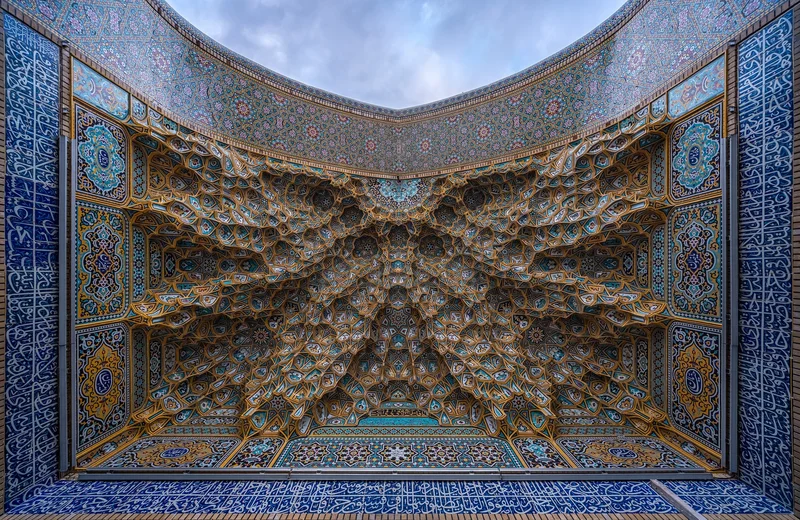
The Fatima Masumeh Shrine is Qom’s spiritual heart, an extensive ensemble of courtyards, iwans, domes and richly decorated halls. A golden dome, turquoise tilework, calligraphy and the constant presence of pilgrims weave architecture, living ritual and urban life together.

Image source · Wikimedia CommonsJavad2493 · CC BY-SA 4.0Photograph cropped

Jamkaran Mosque

South-east of Qom, Jamkaran Mosque is an important Shia pilgrimage site, particularly lively on Tuesday evenings. Broad courtyards, blue domes and minarets are designed for large gatherings, and the illuminated complex takes on a distinctive presence after dark.

Image source · Wikimedia CommonsAmir Pashaei · CC BY-SA 4.0Photograph cropped

Qom Bazaar

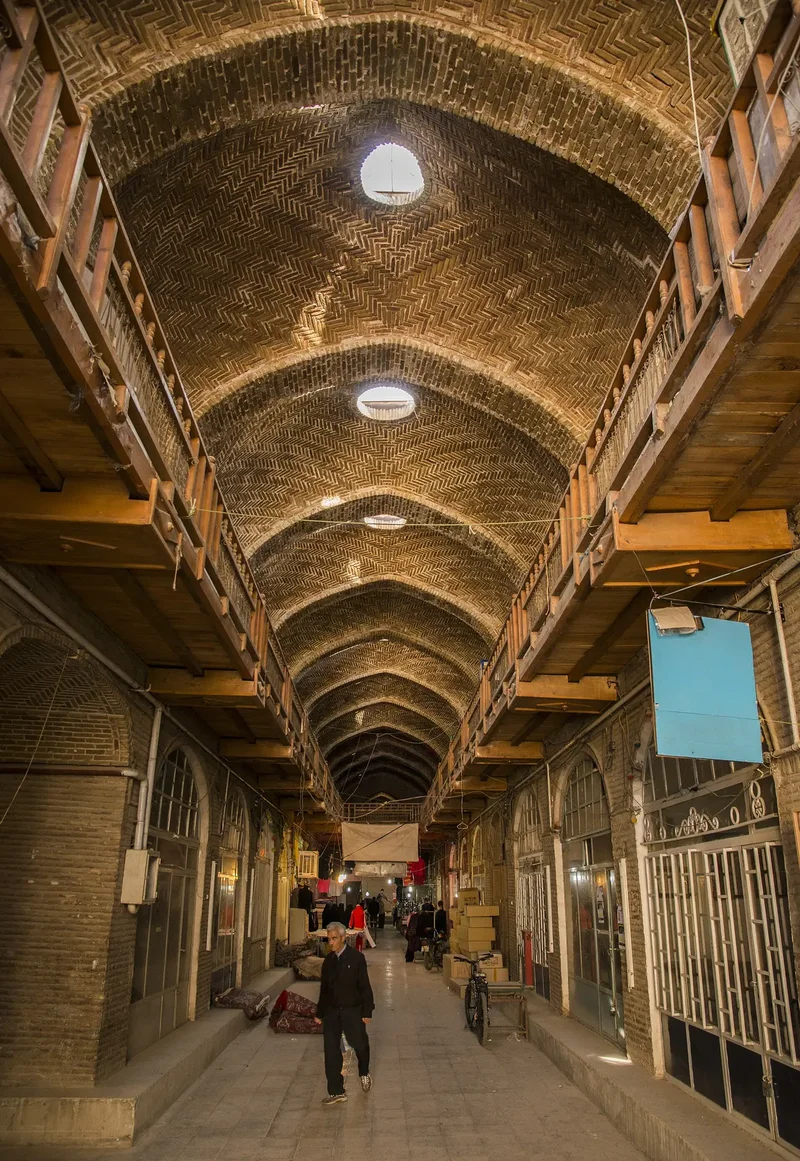
With brick-vaulted lanes, caravanserai courtyards and the Grand Timcheh, Qom’s historic bazaar expresses the long connection between pilgrimage and trade. High domes and geometric skylights form a striking setting for silk carpets, spices and local sweets, while the market’s rhythm remains part of daily city life.

Image source · Wikimedia CommonsMostafameraji · CC BY 4.0Photograph cropped

Salt Lake

North-east of Qom, Hoz-e Soltan is a seasonal expanse of shallow water, salt and open horizon. Rainfall reshapes its extent, and when a thin layer of water covers the salt crust, the sky is reflected like a mirror. Marshy areas should be approached only by safe routes and with informed local guidance.

Image source · Wikimedia CommonsMrs.Alef · CC BY-SA 4.0

Kahak

Kahak is a historic town south of Qom, known for a cooler mountain setting and a house associated with the philosopher Mulla Sadra. Mud-brick quarters, gardens and water channels contrast with the province’s surrounding salt desert.

More about Qom

Important Cities
  • Qom — pilgrimage and bazaar
  • Kahak — Mulla Sadra’s house and gardens
  • Salafchegan
Food & Souvenirs

Local food

  • Abgoosht Qonbid — a kohlrabi meat broth
  • Ash Qonbid — a kohlrabi soup
  • Sohan sweet

Souvenirs & crafts

  • Silk carpets
  • Kharmohreh beads
  • Gem cutting and ring making
Culture & Arts

Pilgrimage and religious education shape Qom’s cultural life. Mulla Sadra’s house in Kahak offers another perspective: a philosopher’s residence set among gardens and hills, beyond the shrine city.

UNESCO & Heritage

Selected UNESCO World Heritage properties

  • The Persian Caravanserai (2023) — Deyr-e Gachin, a component of the serial property

Other historic places

Other heritage stops include the Fatima Masumeh Shrine, Jamkaran Mosque and Mulla Sadra House; these are not individually inscribed World Heritage properties.

Selected Universities
  • University of Qom

Explore by interest

Explore next

Official & Further Resources