 01
Golestan Palace
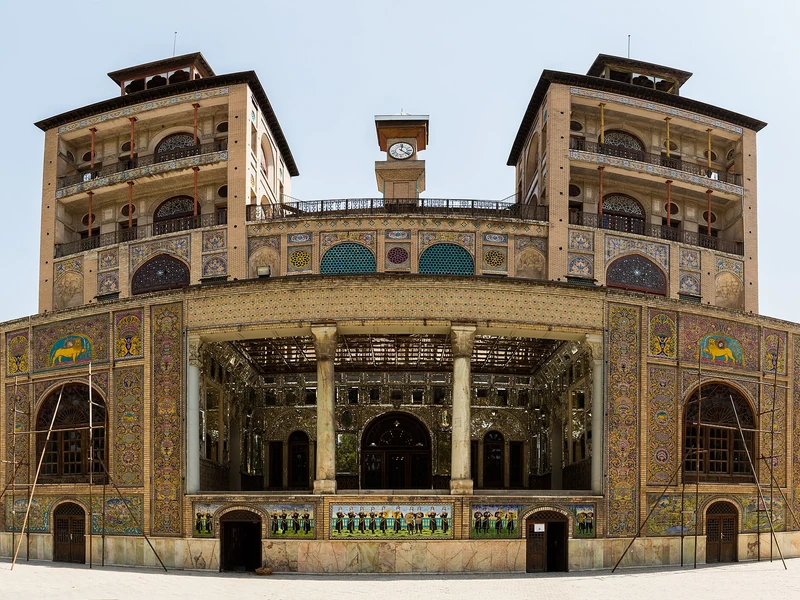
Golestan’s Mirror Hall, Marble Throne terrace and Shams-ol Emareh form part of a Tehran palace complex substantially expanded by the Qajar court.

Southern Alborz foothills and Central Iranian Plateau
Palaces, museums and a mountain backdrop
Tehran’s Golestan Palace was a Qajar royal residence, while Azadi and Milad are later additions to the capital’s architecture. The National Museum presents archaeological collections in its Ancient Iran and Islamic-era buildings.
The province also includes the historic city of Rey and the towns of Damavand and Firuzkuh. The Alborz foothills lie to the north, alongside the capital’s urban landscape of palaces, museums and neighbourhoods.
05
01Golestan’s Mirror Hall, Marble Throne terrace and Shams-ol Emareh form part of a Tehran palace complex substantially expanded by the Qajar court.
 02
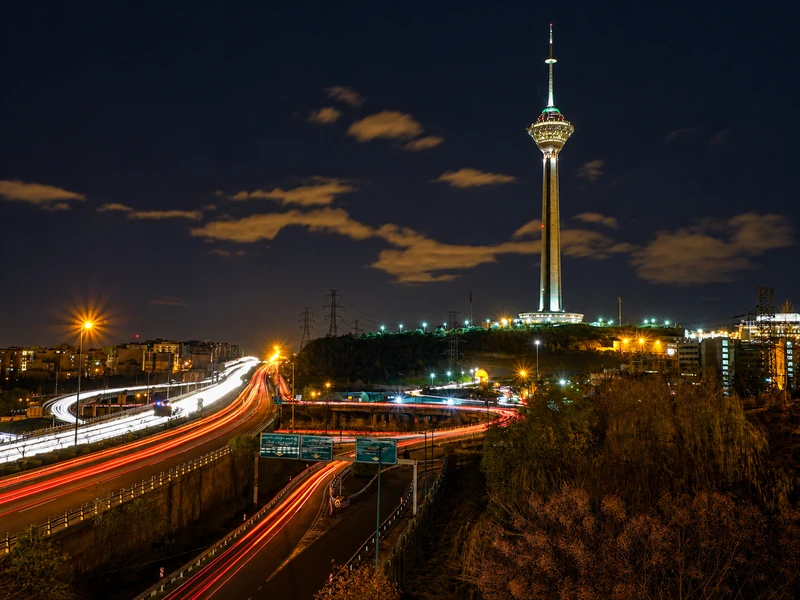
An observation terrace and glass sky dome share Milad Tower with communications equipment; Tehran’s octagonal tower was completed after eleven years of construction.
 03
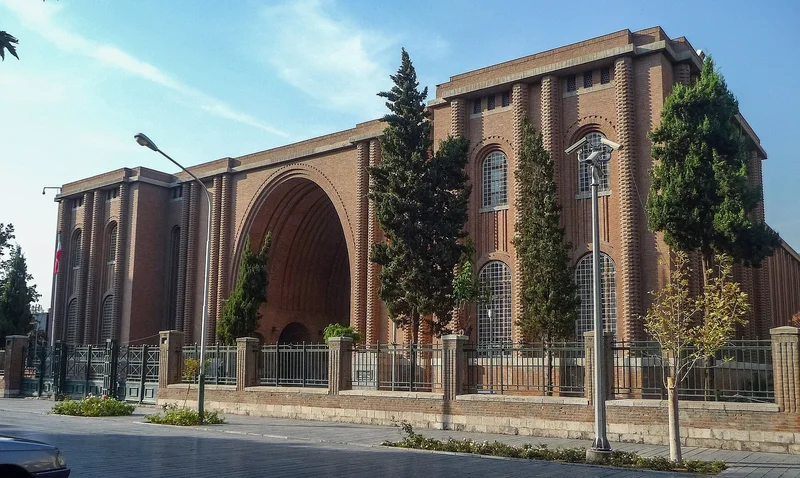
Iran’s National Museum brings archaeological collections into two Tehran buildings: the Ancient Iran Museum, designed by André Godard, and the Islamic-period museum.
 04
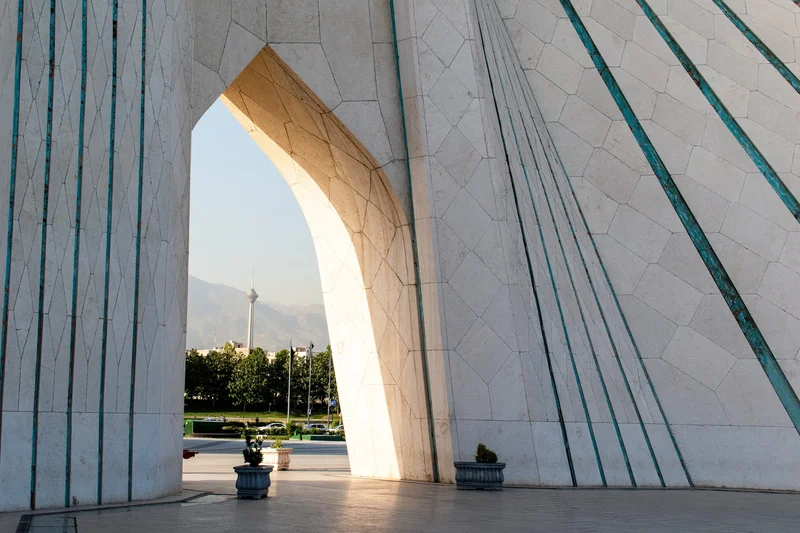
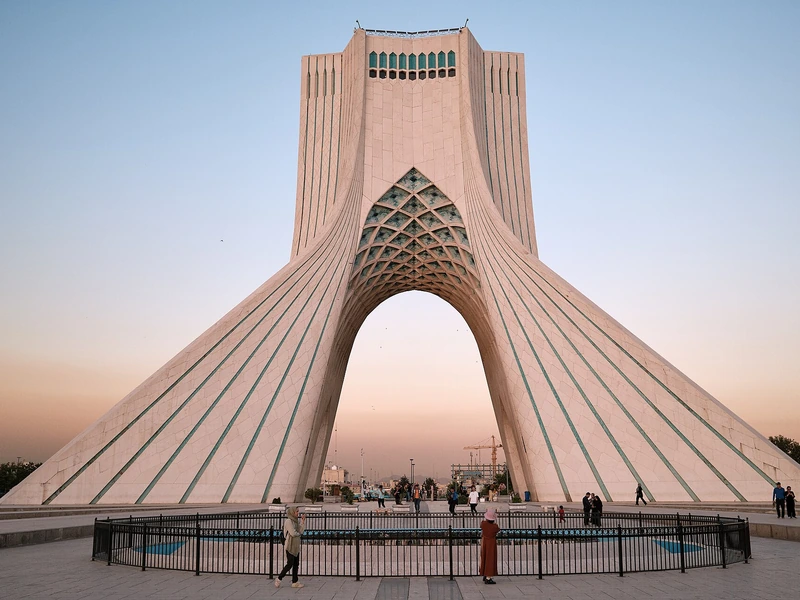
Hossein Amanat’s Azadi Tower draws on Sasanian, Achaemenid and Islamic architectural forms, combining arches within a symmetrical monument in western Tehran.
 05
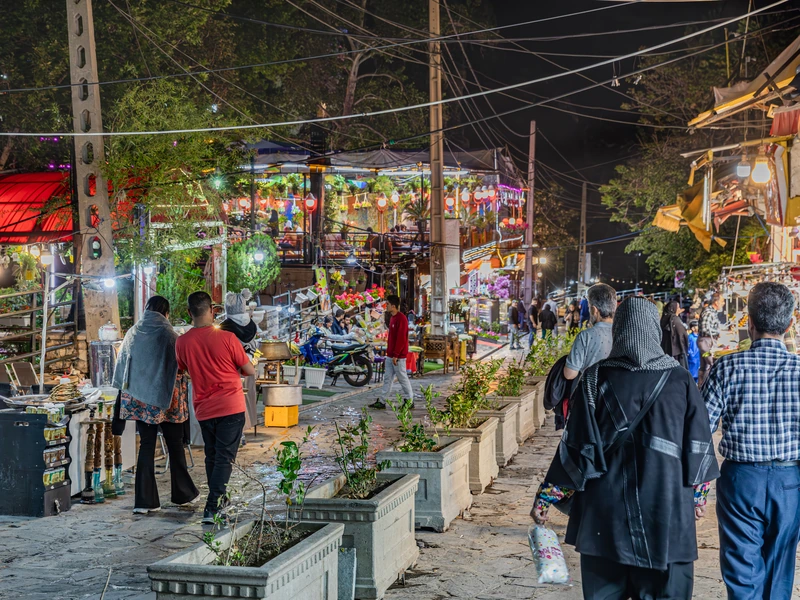
Darband’s river runs through northern Tehran and waters local gardens; the former Shemiran village lies along a valley route towards Mount Tochal.
Golestan’s Qajar decoration combines Iranian arts with European influences. Tehran’s Gereh Chini workshops offer a contemporary continuation of traditional craftsmanship, assembling small wooden pieces into geometric latticework without losing its architectural character.
Other cultural stops include Saadabad, Niavaran Palace and Tehran Grand Bazaar; these are not individually inscribed World Heritage properties.