Naraq
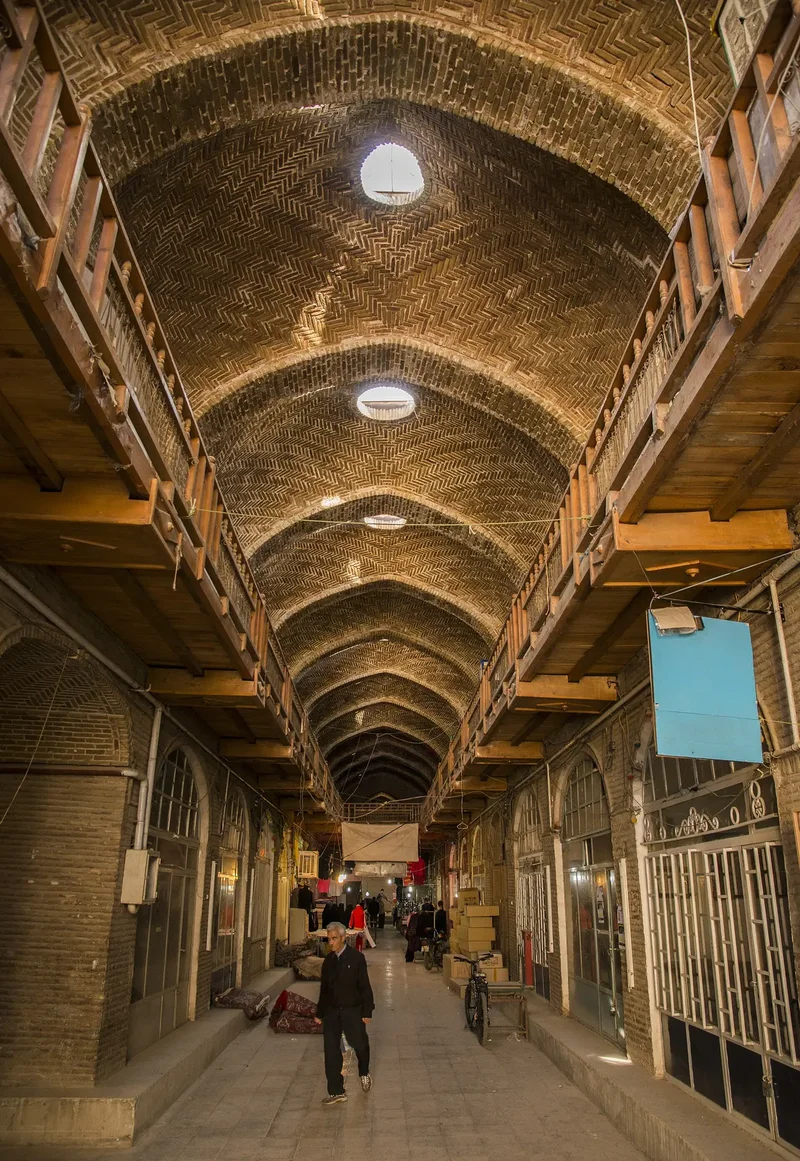
Naraq is a small historic town in Markazi Province with mud-brick houses, a covered bazaar and Qajar domestic architecture. Narrow lanes and inward-looking courtyards demonstrate an urban form adapted to a dry climate.

Central Iranian Plateau
Stone villages, ancient columns and salt wetlands
Markazi can be explored through Arak’s Qajar bazaar and the carpet traditions of Saruq. Industrial towns share the central plateau with archaeological sites and farming settlements; the columns of Khorheh and the Four Seasons Bath offer different perspectives on the region’s past.
Beyond Arak, Mahallat’s greenhouses and springs contrast with Saveh’s pomegranate orchards. Plains, foothills and Meyghan Wetland give a provincial journey varied stops, combining urban heritage with nearby landscapes.
05
Naraq is a small historic town in Markazi Province with mud-brick houses, a covered bazaar and Qajar domestic architecture. Narrow lanes and inward-looking courtyards demonstrate an urban form adapted to a dry climate.
Mahallat is known for springs, gardens and its role as one of Iran’s principal flower-growing centres. Thermal waters, greenhouses and commercial flower fields create a landscape shaped jointly by nature and cultivation.
Meyghan Wetland is a seasonal saline lake near Arak. As water levels change, salt flats and belts of salt-tolerant vegetation shift, while winter brings cranes and other migratory birds.
At Khorheh near Mahallat, two slender stone columns with Ionic capitals survive from a substantial ancient building. Rooms, corridors and archaeological finds attest to Seleucid, Parthian and Sasanian phases, while the isolated columns create an enigmatic landmark between valley and mountains.
Khomein Historic House is a Qajar family compound with several courtyards, pools, defensive towers and residential quarters. It is also known as the birthplace of Imam Khomeini and now presents his early life.
Arak’s bazaar links commerce with carpet making. In Nimvar, the spring Bilgardani ritual accompanies irrigation-channel clearing and the agricultural season, offering a specific glimpse of the province’s rural culture.
Other heritage stops include Arak Bazaar, the Four Seasons Bath and Khorheh; these are not individually inscribed World Heritage properties.