Qazvin

Northwest central plateau and Alborz foothills

Qazvin

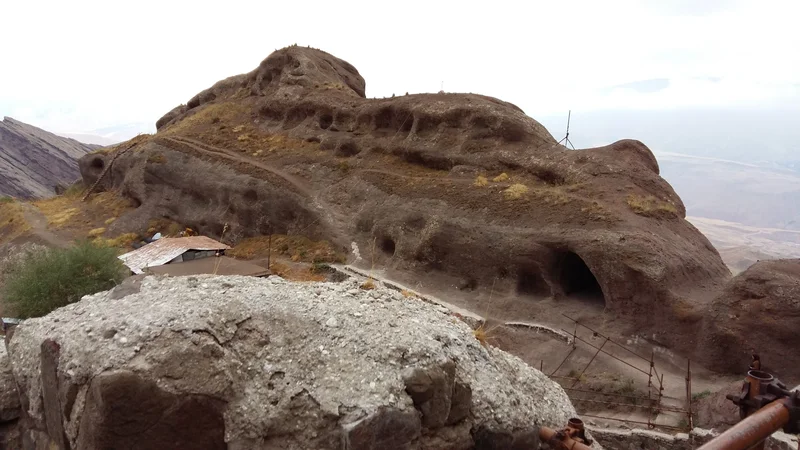
From caravanserais to the fortress of Alamut

Image source · Wikimedia CommonsS.Mary.Gh · CC BY-SA 4.0

Qazvin was once a Safavid capital, a role still visible in Chehel Sotoun Pavilion and the surrounding monuments. Mir Emad’s calligraphic legacy and Sa’d al-Saltaneh Caravanserai connect art and trade with a city that rewards exploration on foot.

To the north, the province rises into the Alborz, where Alamut’s fortifications and Ovan Lake offer a different itinerary. A visit can combine historic streets with mountain roads, orchards and the local dish Gheimeh Nesar.

Qazvin at a Glance

Capital
Qazvin
Region
Northwest central plateau and Alborz foothills
Best season
Spring & autumn
Suggested stay
1–2 days for Qazvin city; 3–4 days including Alamut and the province
Best for
History · Architecture · Art · Nature · Food
Main access
Rail · Road

05

5 essential places

Image source · Wikimedia CommonsAbtin · CC BY-SA 3.0Photograph cropped.

Chehel Sotoun Pavilion

Qazvin’s Chehel Sotoun, also known as the Kolah Farangi pavilion, is one of the few royal buildings surviving from the city’s years as Shah Tahmasp’s Safavid capital. Two-storey halls, wooden windows and layered murals reveal several artistic eras; the building now houses a calligraphy museum.

Image source · Wikimedia CommonsParastoo.Atrsaei · CC BY-SA 4.0Photograph cropped

Sa'd al-Saltaneh Caravanserai

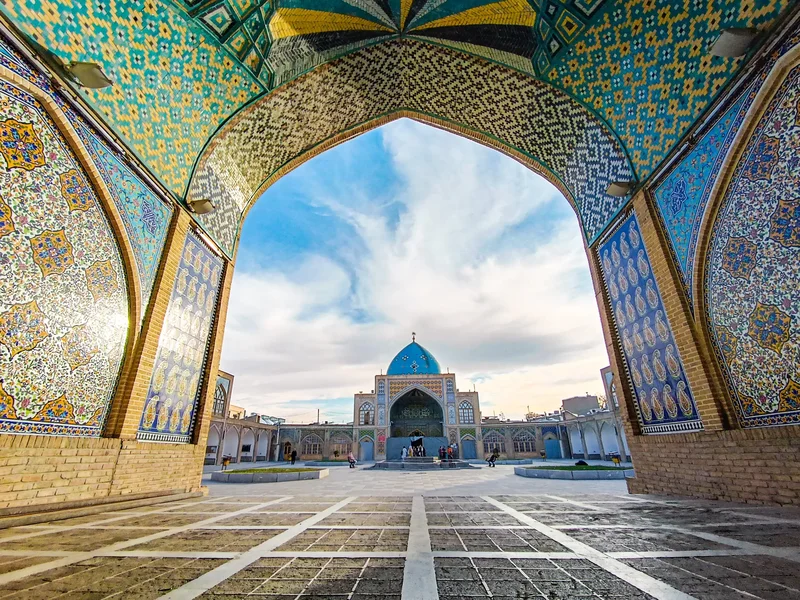
At the heart of Qazvin, Sa'd al-Saltaneh is a vast Qajar ensemble of courtyards, caravanserai chambers, market lanes and brick domes. Domed skylights and a grand bazaar crossroads recall the movement of merchants, while restored spaces now welcome craftspeople, shops and cafés.

Image source · Wikimedia CommonsKourosh-kahal · CC BY-SA 4.0Photograph cropped

Aminiha Hosseiniyeh

Aminiha House is one of Qazvin’s splendid Qajar residences. Interconnected halls, stained-glass orosi windows, delicate stucco and mirrorwork open towards private courtyards. Light moving across these surfaces turns the home of a prominent urban family into a vivid encounter with the art of Qajar domestic life.

Image source · Wikimedia CommonsHussein abri · CC BY-SA 4.0Photograph cropped

Ovan Lake

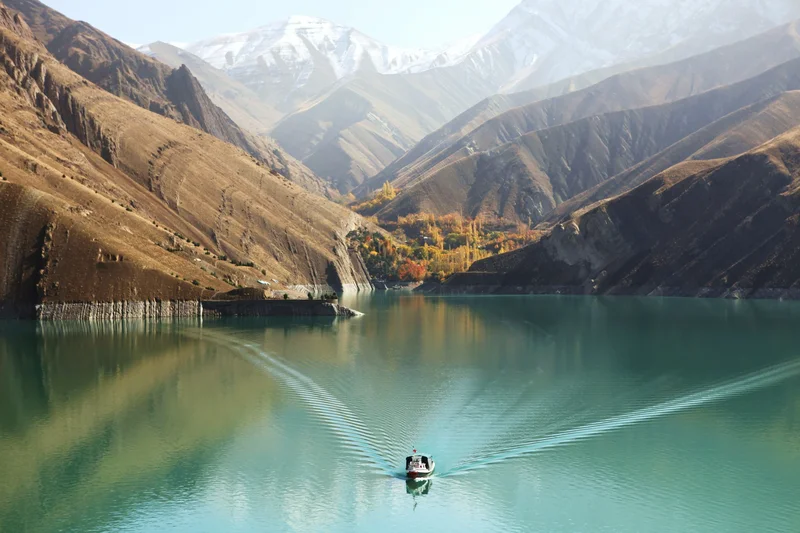
High in Alamut on the slopes of the Alborz, Ovan Lake is fed by underground springs. Calm water, surrounding villages and orchards, and mountains that turn white in winter make it a graceful setting for walking, photography and unhurried time in nature.

More about Qazvin

Important Cities
  • Qazvin — Safavid monuments and bazaar
  • Takestan
  • Razmian — access to Lambesar Castle
Food & Souvenirs

Local food

  • Gheimeh Nesar
  • Dimaj
  • Nan Chai cookies

Souvenirs & crafts

  • Calligraphy
  • Mowj weaving
  • Alamut Pan ribbon weaving
  • Bead embroidery
Culture & Arts

Mir Emad of Qazvin was an influential master of Nasta’liq calligraphy. This artistic legacy, alongside the decoration of Safavid monuments, gives a city visit a perspective beyond its history as a capital.

UNESCO & Heritage

Selected UNESCO World Heritage properties

  • Alamūt Castle and Related Fortifications (2026) — a serial property in the Alamut mountains
  • The Persian Caravanserai (2023) — Sa’d al-Saltaneh, a component of the serial property

Other historic places

Other heritage stops include Chehel Sotoun Pavilion, the Jameh Mosque and Aminiha Hosseiniyeh; these are not individually inscribed World Heritage properties.

Selected Universities
  • Imam Khomeini International University

Explore by interest

Explore next

Official & Further Resources