 01
Shushtar Hydraulic System
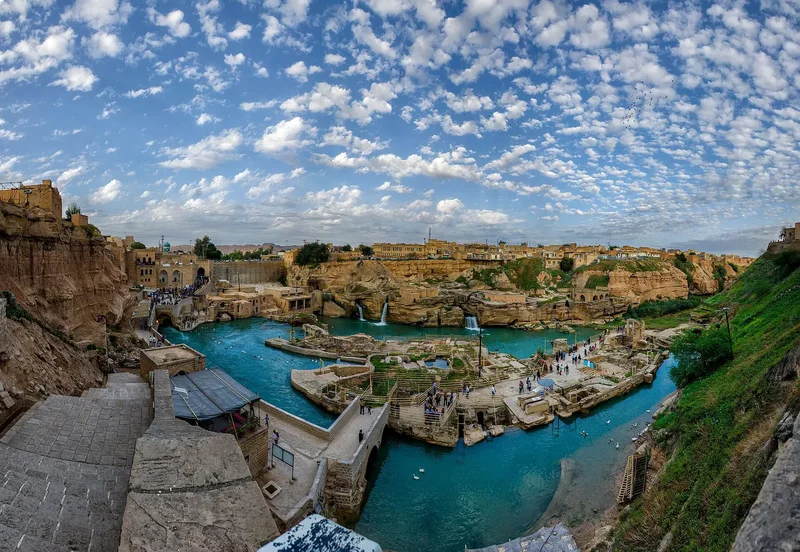
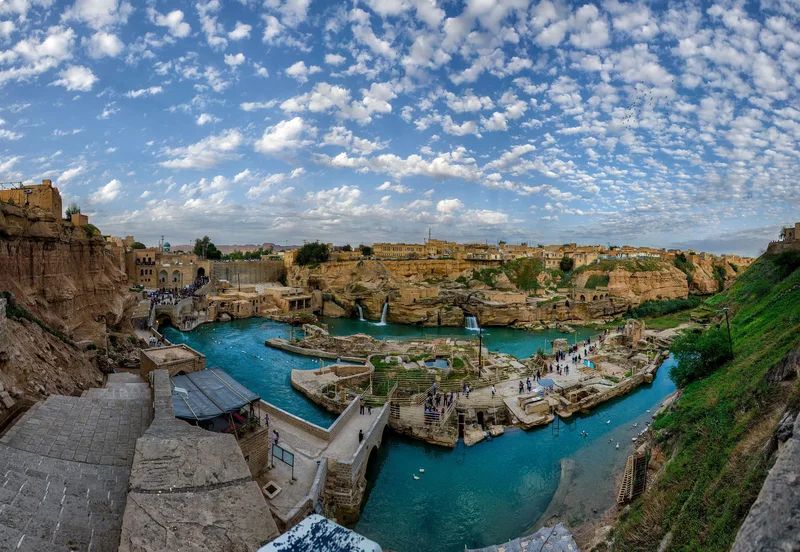
Shushtar’s canals, tunnels and bridge-dams distributed Karun water to mills and farmland. The linked structures became a UNESCO World Heritage property in 2009.

Southwestern Iran · Khuzestan plain and Zagros foothills
Elamite cities and the waterways of Shushtar
Khuzestan contains Susa and the Elamite ziggurat of Chogha Zanbil. At Shushtar, canals, bridge-dams and mills form a historic hydraulic system. All three sites are inscribed on UNESCO’s World Heritage List.
The Karun flows through Ahvaz, while Shadegan Wetland adds another water landscape. Hot southern plains contrast with the Zagros foothills in the north of the province; autumn and winter are better suited to visiting the lowlands.
05
01Shushtar’s canals, tunnels and bridge-dams distributed Karun water to mills and farmland. The linked structures became a UNESCO World Heritage property in 2009.
 02
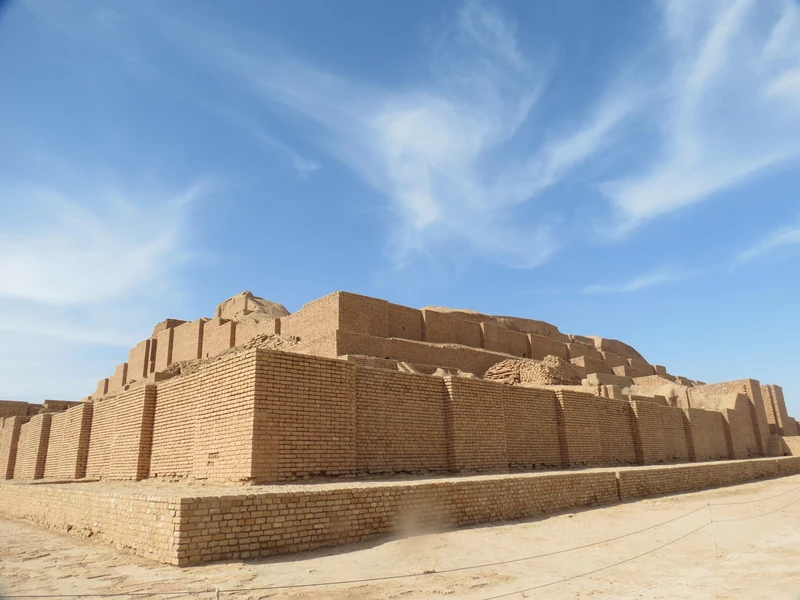
Chogha Zanbil’s ziggurat stands within three concentric enclosures. The Elamite religious centre in Khuzestan was founded in the thirteenth century BCE.
 03
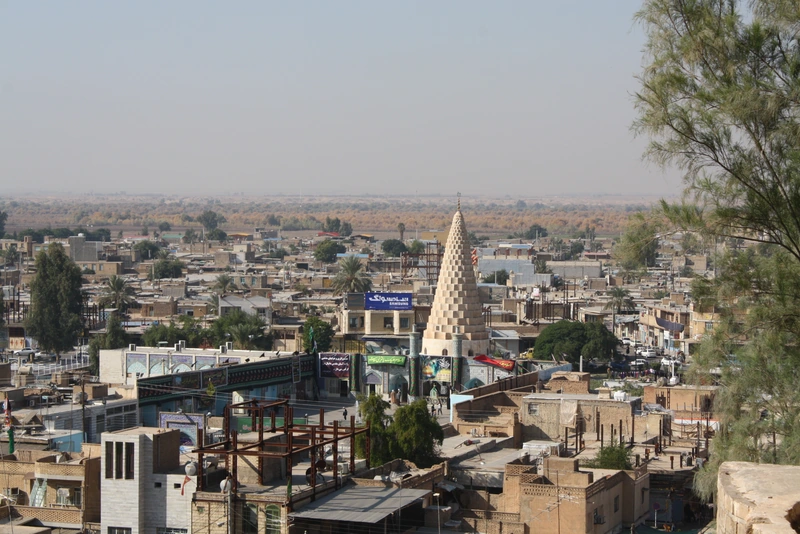
Susa preserves successive urban layers, palaces and residential remains beside the Shavur River. Its history spans Elamite, Persian and later cultural traditions.
 04
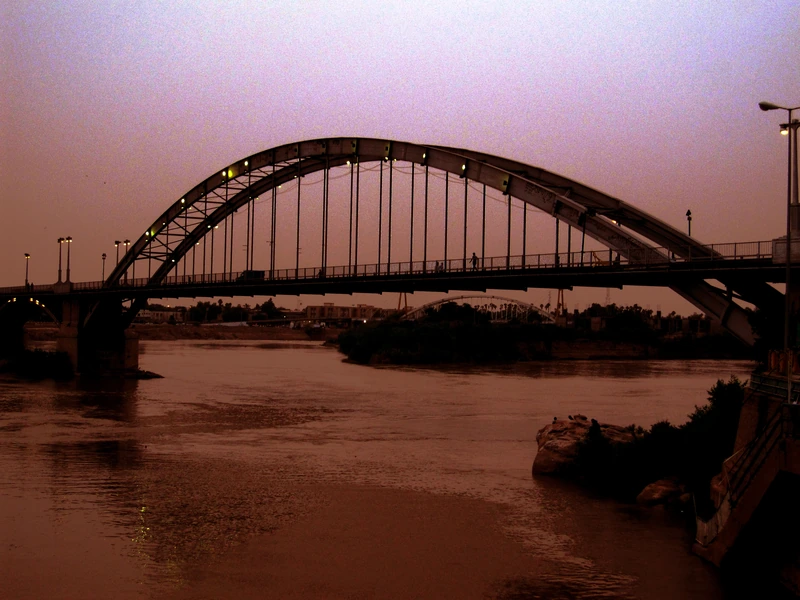
The Karun rises in Zard Kuh and runs through Chaharmahal and Bakhtiari into Khuzestan. In Ahvaz, bridges link its eastern and western banks.
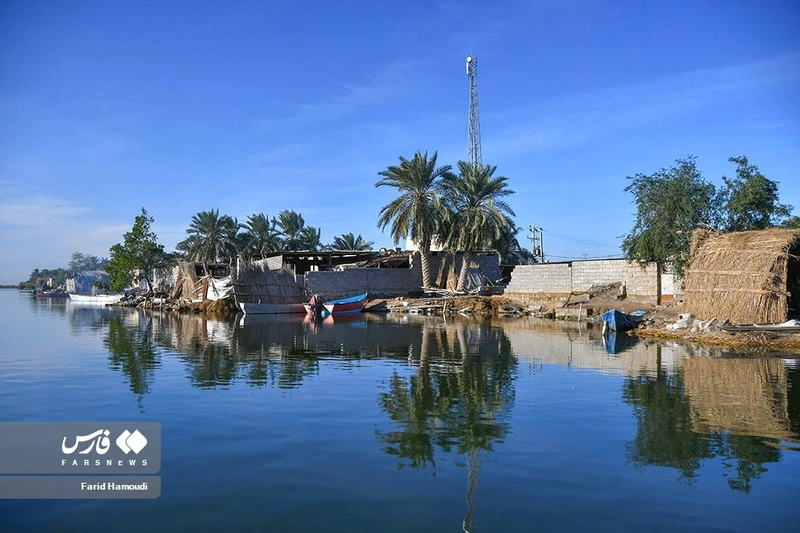 05
Shadegan combines freshwater marshes, brackish water and tidal flats in southern Khuzestan. Its wetlands support waterbirds and local fishing, buffalo keeping and reed harvesting.
Arab communities in Khuzestan welcome guests with coffee served from a dallah pot. Among Bakhtiari communities, Shahnameh recitation at Nowruz and Yalda keeps traditions of storytelling part of social gatherings.
Dezful’s historic bridge and Ahvaz’s historic houses offer further architectural visits; they are not individually inscribed World Heritage properties.